
GET
/api/v1/fees/typesList Types
fee:viewDefine fee types, installment amounts and eligible billing structures.
Intended access: Assigned account with the required permissions.
fee:viewfee:createfee:manageUse the public sample demo to learn this flow. Your assigned ERP account determines access to actual school records.
A school account with the permissions shown below.
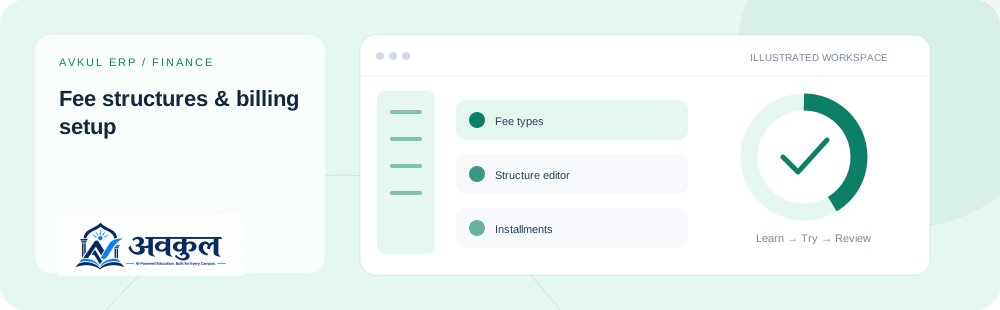
Structure editor is part of the documented workflow.
Installments is part of the documented workflow.
Review the result in the connected record or workspace before moving on.
Source-declared fields used by related operations; each operation has its own validation and scope.
| Field | Declared type | Input |
|---|---|---|
name | string | Required by declaration |
code | string | Optional |
isRecurring | boolean | Optional |
isOptional | boolean | Optional |
classId | string | Optional |
studentId | string | Optional |
sessionId | string | Optional |
items | FeeStructureItemDto[] | Required by declaration |
structureId | string | Required by declaration |
installmentNo | number | Optional |
sectionId | string | Optional |
dueDate | string | Optional |
notes | string | Optional |
Source inventory checked on 11 October 2026. Guide availability confirms documentation publication, not certification of every external service or device flow.
Open a guided sample workspace, try the available actions, then reset whenever you like. No login required.
These are the source-matched API operations connected to this guide. Reading this reference does not execute any request.
/api/v1/fees/typesList Types
fee:view/api/v1/fees/typesCreate Type
fee:createDeclared request fields: name (required), code (optional), isRecurring (optional), isOptional (optional).
/api/v1/fees/structuresList Structures
fee:view/api/v1/fees/structuresCreate Structure
fee:createDeclared request fields: name (required), classId (optional), studentId (optional), sessionId (optional), items (required).
/api/v1/fees/generate/previewWho would be billed, for how much, and who is already invoiced
fee:viewDeclared request fields: studentId (optional), structureId (required), installmentNo (optional), classId (optional), sectionId (optional), dueDate (optional), sessionId (optional), notes (optional).
/api/v1/fees/generateGenerate invoices for every eligible student
fee:manageDeclared request fields: studentId (optional), structureId (required), installmentNo (optional), classId (optional), sectionId (optional), dueDate (optional), sessionId (optional), notes (optional).
ERP links use your assigned account. Record-specific pages start from the list so you can choose a real record.